Working out alone has its merits, offering solitude and focus, but introducing a partner into your fitness regime can unlock a new level of physical challenge and interpersonal connection. Bodyweight exercises, particularly those centred around the plank, are incredibly effective for building core stability, but they can often feel monotonous when performed solo. By engaging in partner planking, you transform a static, often dreaded exercise into a dynamic, interactive experience that demands communication and mutual support. This approach not only doubles the accountability but also introduces an element of instability and unpredictability that solo training simply cannot replicate, forcing your muscles to adapt in real-time to your partner's movements.
Understanding the mechanics of partner resistance
The primary physical benefit of partner planking lies in the concept of dynamic resistance. When you hold a standard plank on the floor, you are fighting against gravity, which is a constant and predictable force. However, when you introduce a partner—perhaps by clapping hands while holding the position or resting your feet on their back—you introduce variable forces. Your core muscles, including the rectus abdominis, obliques, and transverse abdominis, must fire rapidly to stabilise your spine against these shifting loads. This heightened activation leads to greater strength gains and improved balance. Furthermore, the necessity to synchronise movements with another person requires a level of mental focus that prevents the mind from wandering, ensuring that every second of the exercise is purposeful and intense.
Building trust through shared effort
Beyond the physical gains, partner exercises act as a powerful tool for building trust and rapport. To successfully execute a partner plank variation, you must rely on your counterpart to hold their weight, maintain their form, and communicate their fatigue levels honestly. This reliance fosters a sense of shared responsibility; if one person collapses, the exercise fails for both. This dynamic is particularly evident in exercises like the 'wheelbarrow plank', where one partner holds the other’s ankles while walking forward. The person in the plank position must trust their partner not to drop them or move too quickly, while the standing partner must be attentive to their teammate's stability. Over time, navigating these physical challenges together strengthens the bond between workout buddies, whether they are friends, family members, or romantic partners.
The high-five plank challenge
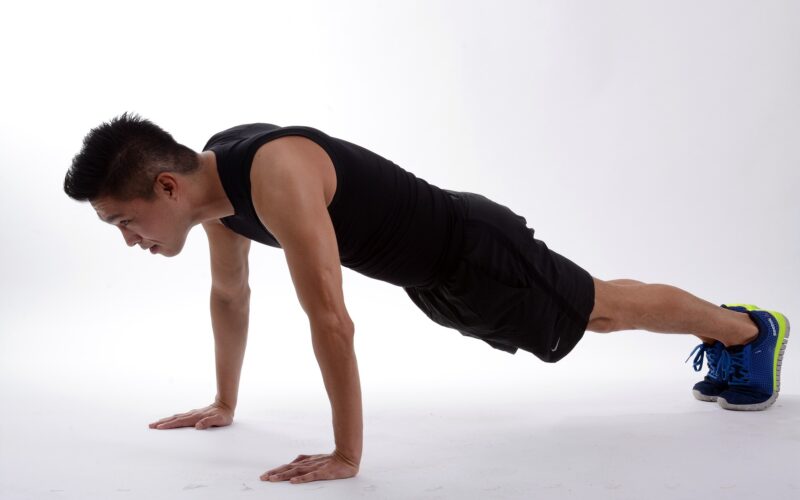
One of the most accessible yet effective entry points into this training style is the high-five plank. Both partners face each other in a standard high plank position (top of a push-up), roughly an arm’s length apart. Engaging the core to prevent the hips from swaying, each partner lifts their right hand to clap the other's right hand, then returns it to the floor before repeating with the left. The challenge here is anti-rotational stability; as you lift one arm, your body naturally wants to twist. Fighting this urge while coordinating the timing of the high-five with your partner demands significant oblique strength. As you progress, you can increase the speed or duration, turning a simple stability drill into a high-intensity interval that leaves both participants breathless and laughing.
Advanced variations for greater intensity
For those who have mastered the basics, more advanced variations can significantly ramp up the difficulty. The 'plank tunnel' is a fantastic group exercise but works well with just two people if modified. One partner holds a static high plank while the other crawls underneath them, then hops over their legs, repeating the cycle. This forces the static partner to maintain rigid tension for an extended period while the moving partner engages in a full-body cardio and mobility workout. Another advanced move is the 'stacked plank', where one partner holds a standard plank and the second partner places their hands on the first partner's shoulders and feet on their heels, effectively planking on top of them. This requires immense stability from the bottom partner and delicate balance from the top partner, making it the ultimate test of core strength and teamwork.
Essential safety tips for partner training
While the benefits are substantial, safety remains paramount when adding a partner’s weight or movement to your routine. Communication is the bedrock of injury prevention; partners should agree on non-verbal signals or keywords to stop the exercise immediately if form breaks down or pain occurs. It is crucial to match partners of relatively similar strength or to modify exercises so that size discrepancies do not lead to injury. For instance, the heavier partner should typically take the base position in stacked exercises. Additionally, maintaining proper alignment—keeping the spine neutral and avoiding sagging hips—is even more critical when external forces are applied. If fatigue causes form to suffer, it is better to terminate the set early than to risk straining the lower back.
Creating a sustainable fitness partnership
Integrating partner planking into your regular schedule can revitalise a stale workout routine and provide the motivation needed to reach new fitness milestones. The shared struggle and subsequent success create a positive feedback loop, making you more likely to stick to your training plan. By viewing fitness as a collaborative effort rather than a solitary chore, you not only build a stronger, more resilient body but also cultivate deeper relationships built on trust and mutual support. Whether you are aiming to improve your athletic performance or simply want to make your core workouts more engaging, grabbing a partner and hitting the floor might just be the most effective strategy you haven't tried yet.